
How the EMA’s Steffen Thirstrup Is ‘Standing Up for Science’

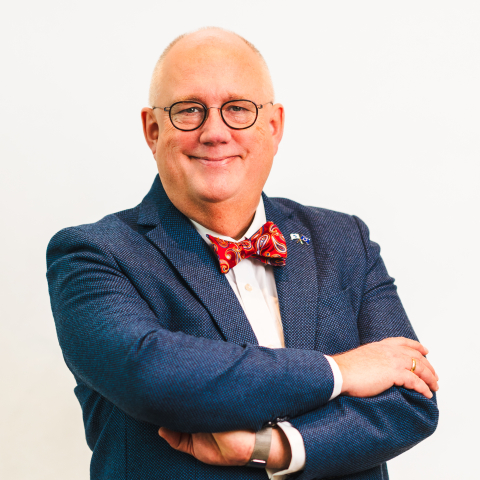
Steffen Thirstrup, MD, PhD, spends his days steeped in the meticulous world of drug regulation. But other issues are keeping him up at night: health misinformation and anti-science politics.
Thirstrup is chief medical officer of the European Medicines Agency, the European Union’s drug regulator, based in Amsterdam. Since taking the job in 2022, he has grappled with the COVID-19 pandemic, anti-vaccine politics in Europe, and upheaval at the Food and Drug Administration, the EMA’s U.S. counterpart.
Now, the agency’s attempts to meet the political moment are being tested.
In this Q&A, Thirstrup explains why the EMA is taking on a more public role in fighting misinformation—and the risks of staying silent.
When President Trump was elected, many global health experts predicted that all eyes would be on the EMA to uphold the gold standard of drug regulation. Have you felt that pressure over the past year?
At international conferences, there is the same, if not more, focus on what is happening in Europe. But it also coincides with us being increasingly outspoken about standing up for science and fighting mis- and disinformation, which to some extent is related to what we see happening around the world on a high political level, but also generally following COVID-19, with all the vaccine hesitancy.
There is still vaccine hesitancy in Europe, and there is still all of the anti-science sentiment and misinformation about medicines and health issues in general being spread. We see a role there in stepping up, independent of where the misinformation is coming from.
How do you decide what merits a response—for example, the Trump administration’s claims on taking paracetamol during pregnancy, which the EMA quickly emphasized is safe?
That was a very strong statement. My first thought was, ‘Boom—is there anything we have overlooked here scientifically? Do the FDA know something we don’t know, and they’ve forgotten to tell us?' It was such a strong message, and it could have negative consequences if pregnant women followed it and did something differently.
We cannot react to every mis- and disinformation that we by chance pick up, but if we see that there is a potential negative health impact, we try to push back.
I could see that getting unwieldy. What do you see as the EMA’s lane here?
One thing is going out with statements. But we also need to communicate at the same eye-level as the audience. We’re also engaging with influencers or content creators online who we trust, to have them push positive messages, and also push back on misinformation on things like GLP-1s.
It's a challenge, because it all comes down to communicating technically very advanced messages, and if you over-simplify, that could also be seen as trying to hide something, or even lead to misunderstanding, because nuances are important as well.
How do you think EMA’s work on this will change over the next couple of years?
I think we will continue having challenges with mis- and disinformation and conspiracy theories. There are two things: the speed of information flow and social media, where everybody can make themselves an expert; and political movements, where there seems to be a tendency to support, or even maybe distribute, information that questions scientific validity and science.
If you go back to COVID-19, there were very outspoken politicians in Europe who were pushing information that was definitely not aligned with the general scientific understanding.
I don’t think that is going away, but I also think that we have become more aware of this challenge and the importance of us being out there, being transparent and providing information. We’re trying to re-establish trust in what we are doing, and first of all, standing up for science.
Importantly, we are not doing this alone … Our recent collaboration with the African Medicines Agency and African regulators in the context of the Ebola outbreak is a strong example of how shared expertise can strengthen global preparedness and trust.
This interview has been edited for length and clarity.
Join the 50,000+ subscribers in 170+ countries who rely on Global Health NOW summaries and exclusive articles for the latest public health news. Sign up for our free weekday newsletter, and please share the link with friends and colleagues.
Outside view of the European Medicines Agency in Amsterdam Image: Robert Meerding, © European Union, 202X, licensed under CC BY 4.0