
The Bacterial Detective Trying to Stop Superbugs in Nigeria
IBADAN, Nigeria—Inside a crowded lab on the second floor of the University of Ibadan's pharmacy school, Iruka Okeke and her dozen students are running a national surveillance project for one of Nigeria's—and Africa's—most understudied problems: antimicrobial resistance (AMR).
More than 1 million deaths in the WHO’s Africa region in 2019 were associated with bacterial AMR. Nigeria, Africa’s most populous nation, has more than 60,000 deaths from AMR annually. “AMR deaths threaten Africa’s future,” says Okeke.
One bacterium that has moved to center stage in her lab: Enteroaggregative E. coli (EAEC), which contributes to AMR and is expected to lead to 10 million deaths worldwide each year by 2050. Most E. coli are harmless, but EAEC clumps in the gut and can cause severe—even fatal—bloodstream and diarrheal infections. These bacteria are prevalent across Africa, but little is known about them. And because they resemble harmless E. coli, it is difficult to know which are harmful—and what makes them cause disease.
The small size of Okeke’s lab belies her team’s ambitions. They use genomic tools such as whole genome sequencing to understand how microbes inherit and spread resistant traits. Using the bacterial genome sequence data, Okeke has identified the specific characteristics of E. coli, such as how it sticks to the gut and releases toxins that sicken children. Her team has revealed the specific strains of EAEC that comprise promising targets for vaccines that could prevent the most common or severe infections.
Brain Gain
Although AMR kills more people in Africa than any other continent, less than 2% of the continent’s labs can run the genomics diagnostics that Okeke devises. So, much of her work focuses on training young Nigerian scientists to build R&D for new interventions.
A bacterial geneticist, Okeke is an unusual example of brain gain. Born in the U.K. to Nigerian parents, she decided to return to her parents’ homeland in her teenage years. She completed a degree in pharmacy and masters in pharmaceutics in 1998, both from Obafemi Awolowo University in Nigeria. Later, she earned a PhD in microbiology and immunology and carried out her postdoctoral research, spending a year as a Fulbright Scholar at the University of Maryland in 2000. After a stint working in England, she moved to the U.S., but returned to Nigeria in 2014.
“Too few scientists are born in England and chose to make their lives in Nigeria,” says Chikwe Ihekweazu, executive director of WHO’s Health Emergencies Programme and former head of Nigeria’s CDC. He collaborated with Okeke to establish Nigeria’s 2017 national action plan for AMR and says that her use of genomics for diagnostics could become the standard surveillance tool in the country.
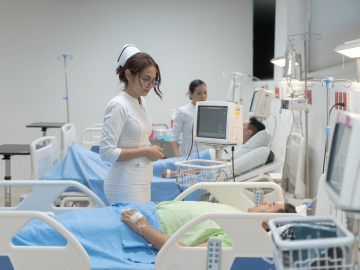
Meanwhile, Okeke and her students are aiming to investigate and prevent deadly bacterial outbreaks in Nigeria. A not-yet-published surveillance study by her lab aims to help curb the spread of drug-resistant microbes in places like hospital neonatal intensive care units (NICUs). But such locales are often hamstrung by poor infrastructure and supply chain bottlenecks. And, as the lab races to stop the spread of the superbugs, the deaths continue to rise.
Okeke founded the Nigeria National Surveillance Unit at the University of Ibadan’s College of Medicine in 2022. It’s one of four genomic surveillance hubs established under the U.K.’s National Institute for Health and Care Research in its Global Health Research Unit. The lab—Nigeria’s first reference lab for AMR surveillance—obtains samples from three sentinel hospitals in Ibadan and runs whole genome sequencing of pathogenic bacteria. It shares genomic and epidemiological surveillance data with the Nigeria CDC to enable targeted infection control and management of AMR outbreaks as well as communicate with WHO’s Global Antimicrobial Resistance and Use Surveillance System.
“We have helped to investigate about a dozen suspected outbreaks and have identified many more through routine sequencing—showing the importance of strengthening infection prevention and control,” says Okeke.
Anticipating Discovery
Sitting on a marble slab in front of Okeke and three students are dozens of petri dishes with brownish blobs of cells that the team grew in the lab from EAEC. El-shama Nwoko, a third-year PhD student in the lab, wants to turn them into mutant cells to study the genes responsible for the bacteria’s ability to cause diseases.
Dressed in her lab coat, a blue marker in one hand, Nwoko carefully labels each petri dish in front of her. Then, a surprising laugh burbles out of her. She’s excited about the promise of what might come out of these four walls. She hopes her work will help the group better understand how to inhibit the growth of the bacteria and contribute to the development of alternative therapeutics against it. “The anticipation of a discovery is thrilling,” she says.
For many years, Okeke has been pushing for routine bacterial whole genome sequencing across Africa to help track bacterial pathogens and close the AMR surveillance gap. The benefits could be immense for public health, she says. In collaboration with hospitals, her lab’s work in Nigeria, for instance, has revealed the high burden of Salmonella typhi circulating in households in Ibadan, a city of more than 3 million people. In a recent, yet-to-be-published transmission study in the lab, they found that up to 90% of the groundwater they collected from wells and boreholes in the city were fecally contaminated.
Among the dozen students in Okeke’s lab is Folami Balogun, a researcher and first year PhD student supported by DELGEMEplus, an Africa-based, Science for Africa Foundation-supported post-graduate education network headquartered in Mali. For his project, nested within the NICU transmission study, Balogun aims to investigate the occurrence of pathogenic microbes like Klebsiella pneumoniae in hospital NICUs across Ibadan. By comparing DNA of the bacteria from different sources, they will trace transmission routes, link cases, and track outbreaks in real-time. But the project is challenged by logistical issues, says Balogun, such as power disruptions to delays in obtaining permission to sample mothers and neonates in the hospitals (though this situation is improving).
In October 2024, Nigeria rolled out a new national AMR policy, and Okeke is hopeful that an Africa-wide genomic surveillance roadmap (expected by the end of 2026) will help African countries stand up their own surveillance systems to fight the superbugs. For example, by repurposing their genomics capacities acquired during the COVID-19 pandemic for AMR surveillance.
But Okeke and her students have to fight daily through the challenges of doing science in Nigeria with limited resources. Some of their major challenges are off-again, on-again government support—a problem now familiar to U.S. scientists—a small lab space, and delays in shipment of reagents.
“There are days I wake up, and I think, ‘Oh, gosh, there’s too many problems to solve—like how are you going to keep the electricity uninterrupted?’” she says. “And then, there are days I wake up and think, ‘It’s amazing we’re doing this stuff that nobody else is doing.’
“A bit of a balance of both is what kind of keeps you going,” Okeke says.
Abdullahi Tsanni is a science journalist who is based in Dakar, Senegal, and specializes in narrative features.
Join the 50,000+ subscribers in 170+ countries who rely on Global Health NOW summaries and exclusive articles for the latest public health news. Sign up for our free weekday newsletter, and please share the link with friends and colleagues.
Iruka Okeke and her small team run a national surveillance project tracking antimicrobial resistance in Nigeria. Andrew Esiebo